


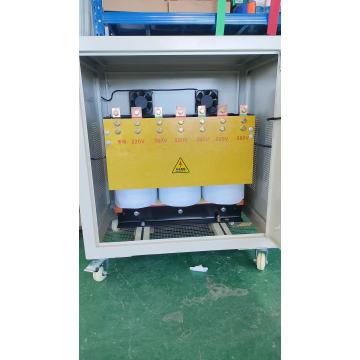
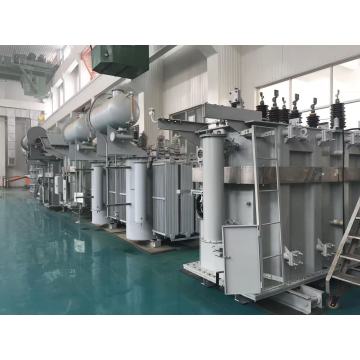
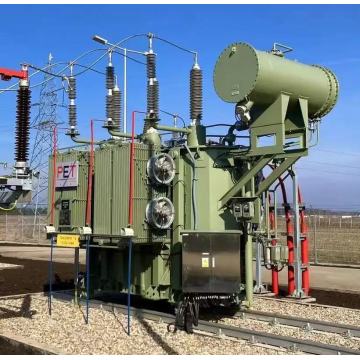
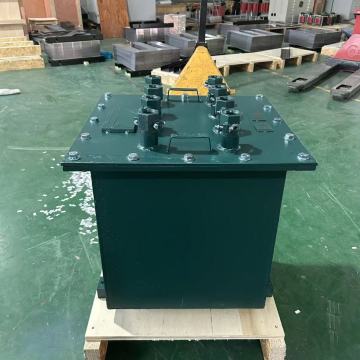
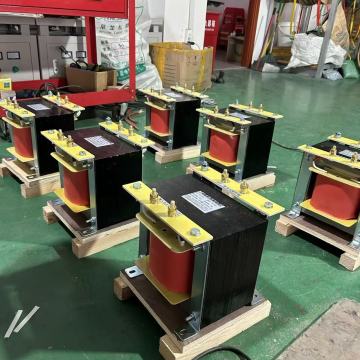
Model No.: hjssp-4000/10、SG-18KVA、 SCB10 、ZSGPK-1000
Transformers are a revolutionary class of deep learning models that have transformed the landscape of natural language processing and beyond. Designed to handle complex tasks such as text generation, translation, and sentiment analysis, these models leverage self-attention mechanisms to capture long-range dependencies in data. With their ability to process sequential information efficiently, transformers have become a cornerstone in modern artificial intelligence applications.
The core concept behind transformers is their architecture, which eliminates the need for recurrent or convolutional layers by using attention mechanisms to weigh the significance of different words in a sentence. This allows for parallel processing and faster training times compared to traditional models. As a result, transformers have gained widespread adoption across various industries, from healthcare to finance, where accurate and efficient data interpretation is crucial.
One of the most notable features of Transformer models is their scalability. They can be fine-tuned for specific tasks, making them highly adaptable to different use cases. Additionally, their capacity to learn from large amounts of data enables them to generalize well across diverse domains. This flexibility has made transformers an essential tool for developers and researchers looking to build intelligent systems that can understand and generate human-like text.
Key characteristics of transformer models include their ability to handle multiple languages, support for bidirectional context, and efficient handling of long sequences. These features make them particularly useful in applications such as chatbots, virtual assistants, and content creation tools. Moreover, their modular design allows for easy integration into existing workflows, reducing the complexity of implementation.
In terms of performance, transformers outperform many traditional models in tasks that require understanding context and meaning. Their success has led to the development of numerous variants, including BERT, GPT, and T5, each tailored for specific purposes. These models have set new benchmarks in natural language understanding and have been widely adopted in both academic and industrial settings.
Transformer technology is not limited to text-based applications. It has also found its way into image processing, speech recognition, and even music generation. By adapting the attention mechanism to different types of data, researchers have expanded the reach of transformers beyond their original scope. This versatility has further solidified their position as one of the most influential innovations in artificial intelligence.
When it comes to deployment, transformer models can be implemented on a variety of platforms, ranging from cloud services to edge devices. Their efficiency and adaptability make them suitable for real-time applications where speed and accuracy are paramount. Furthermore, the availability of pre-trained models has lowered the barrier to entry for developers who want to leverage transformer technology without starting from scratch.
Use cases for transformers span a wide range of industries. In customer service, they power automated responses and improve user experience. In education, they assist in personalized learning and content creation. In research, they enable data-driven insights and accelerate scientific discovery. The potential applications of transformer models continue to grow as more organizations recognize their value.
User feedback highlights the effectiveness of transformer models in enhancing productivity and decision-making. Many professionals praise their ability to process large volumes of information quickly and accurately. Some users note that the models require careful tuning to achieve optimal results, but the benefits often outweigh the effort. Overall, the consensus is that transformers are a powerful tool that can significantly impact how we interact with technology.
Despite their advantages, there are challenges associated with using transformer models. Training them requires substantial computational resources and large datasets, which can be a barrier for some users. Additionally, interpreting the decisions made by these models remains a complex task, raising concerns about transparency and accountability. However, ongoing research aims to address these issues and improve the usability of transformer technology.
Looking ahead, the future of transformer models appears promising. Advances in hardware and software are making it easier to train and deploy these models, while new architectures are expanding their capabilities. As more data becomes available and algorithms improve, transformers will likely play an even greater role in shaping the next generation of intelligent systems.
For those interested in exploring the potential of transformer models, there are numerous resources available. From online courses to open-source libraries, the ecosystem around transformers is growing rapidly. Whether you're a developer, researcher, or business professional, understanding the fundamentals of transformers can open up new opportunities for innovation and problem-solving.
Common questions about transformers often revolve around their training process, performance metrics, and application scenarios. Some users ask about the differences between various transformer variants, while others seek guidance on selecting the right model for their needs. Addressing these questions helps demystify the technology and makes it more accessible to a broader audience.
Ultimately, the impact of transformer models extends far beyond their technical specifications. They represent a shift in how we approach artificial intelligence, emphasizing efficiency, adaptability, and scalability. As the field continues to evolve, transformers will remain at the forefront of innovation, driving progress in countless ways.




 Contact Now